





Value Creation Process
The Daiseki Value Creation Process
- Shift in carbon neutrality policies
- Growing expectations for a circular economy
- Stagnation and hollowing-out of domestic manufacturing
- Prolonged period of yen depreciation and strong U.S. dollar
- Rising expectations for innovation through cross-sector and interdisciplinary collaboration
- Rising demand for increasingly complex and advanced sustainability-related technologies

- Human capital
- Autonomous talent poised to become next-generation leaders
- Social capital
- A broad and solid client base supporting manufacturing, construction, and other industries
- Intellectual capital
- Technical capabilities that meet diverse needs, including cutting-edge technologies
- Manufacturing capital
- Facilities capable of processing large volumes of waste quickly and reliably
- Natural capital
-
Resource-and energy-saving recycling
- Financial capital
-
Sound financial structure


A business model that transforms “unusable” resources into “usable” ones.
Strengths and Value Offered in Our Value Chain
Daiseki’s uniqueness creating its strengths




Five Strengths Driving the Positive Cycle of “One Daiseki”


-
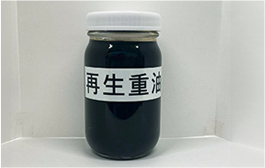
Recycled fuels
-
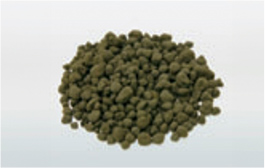
Raw materials for cement
-
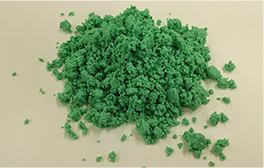
Usable metals, etc.
-
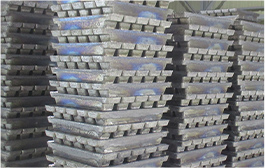
Recycled lead
-
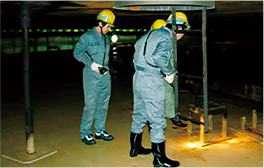
Large-scale tank cleaning
-
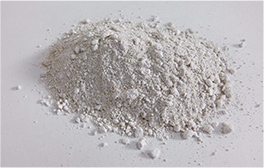
Raw materials for plasterboard
-
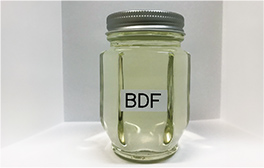
Biodiesel fuel
-
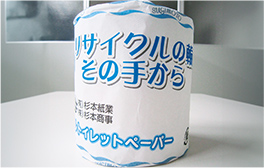
Recycled paper

Economic value
Long-Term Business Plan: Vision 2030
Consolidated net sales
150.0 billion yen
Consolidated operating profit
25.0 billion yen
ROE
15.0%
Social value
-
Prevention of environmental pollution
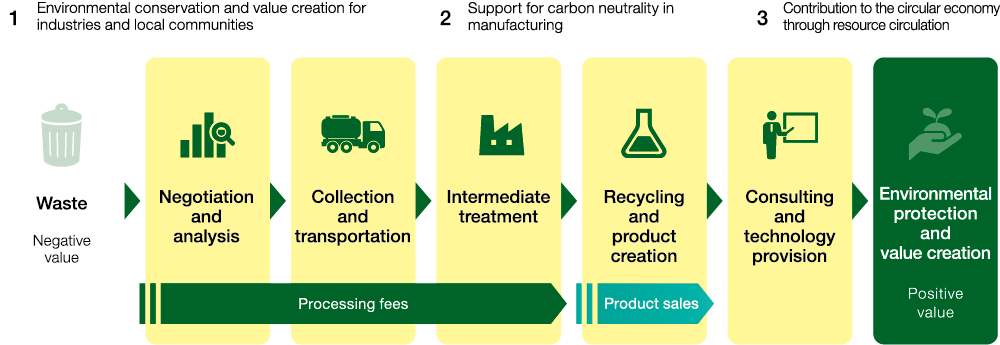
Environmental conservation and value creation for industries and local communities
-
Mitigation of climate change
Support for carbon neutrality in manufacturing
-
Revitalization of domestic manufacturing Ensuring economic security
Contribution to the circular economy through resource circulation
Capital Supporting Growth
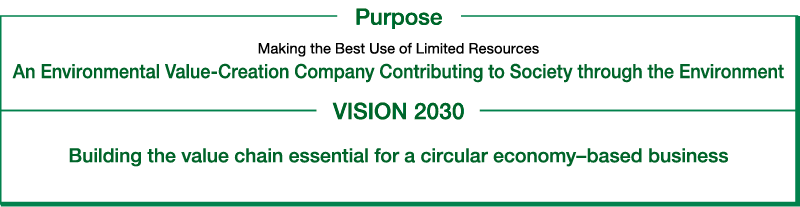
Daiseki is built on a strong capital foundation that enables us to support society and maximize the value of resources through our integrated “One Daiseki” business model. To further enhance and evolve this model, we proactively invest in both human capital and intellectual capital.
Social Capital ー The Foundation of the “One Daiseki” Model
Daiseki’s industry-leading client base is a vital form of capital that supports our “One Daiseki” business model. We serve a broad spectrum of industries—including manufacturing and construction—which forms the backbone of our efforts to realize a circular economy. Our distinctive end-to-end service model, from the acceptance of industrial waste to the processing and sale of recycled products, is made possible by this extensive client network.
By maintaining strong relationships across diverse sectors, we are able to deliver more tailored and effective solutions. The deep trust we have built is also evident in the frequent referrals we receive from business partners and affiliates.
Manufacturing Capital ー Supporting Industrial Production Through Physical Infrastructure
Daiseki operates a nationwide network of facilities, including large-scale industrial waste treatment plants. When businesses select a waste management provider, compliance with the Act on Waste Management and Public Cleaning and possession of proper permits and facilities are basic requirements. In addition, the ability to efficiently handle large volumes of industrial waste is a key factor in provider evaluation.
Daiseki’s robust manufacturing capital enables us to meet the demanding needs of major waste-generating businesses. Through this infrastructure, we support the circulation of recovered waste as a valuable resource.
Human Capital ー The Source of Daiseki’s Technical Expertise and Proposal Capability
Leveraging various forms of capital requires the power of people. At Daiseki, we place great importance on human capital as the foundation of our technical skills and proposal capabilities. We invest in developing independent, management-ready talent by providing management training, including finance education, for executive candidates, and entrusting branch managers with independent, profit-and-loss responsibility.
In new business development, we engage both internal staff and external experts with specialized knowledge to drive progress. To foster future innovation, we are committed to creating a workplace where diverse talent can thrive.
Intellectual Capital ー Embodiment of “wisdom, ingenuity, and action”
Daiseki views waste not as garbage, but as a valuable resource. While industrial waste is classified into 37 categories under the Waste Management and Public Cleansing Act the optimal treatment varies even within the same category depending on the waste’s properties, client requirements, and intended reuse.
We have built services that respond to the diverse needs of environmentally conscious clients and accumulated the technical expertise and know-how to recycle waste while minimizing environmental impact. Daiseki values this approach to waste management as part of our “DNA That Creates Innovation,” placing great importance on intellectual capital.
Strengths and Value Offered in Our Value Chain
To deliver the environmental value demanded by society, we conduct our business activities in waste treatment and recycling under the unified approach of “One Daiseki.” This enables us to consistently meet the diverse needs of our clients while generating revenue at every stage of environmental value creation. Below, we outline the strengths of the Daiseki Group’s value chain, the value it generates, and our future direction.
Consultation and analysis
Through careful listening, analysis, and evaluation, we uncover our clients’ latent needs and identify environmental challenges related to industrial waste treatment and the use of recycled products.
Strengths
Expertise, technical capability, and tailored proposals
- Extensive experience and accumulated know-how in handling diverse types of industrial waste across a wide range of industries
- Specialized analytical equipment and skilled employees
- Ability to offer comprehensive, one-stop solutions through the integrated “One Daiseki” approach, covering all related operations
Value created
Broad business scope and diversified revenue sources
- Support for resolving environmental challenges across a wide range of industries enables a stable revenue structure
- Advanced technological expertise and know-how in industrial waste treatment allow for prompt problem-solving
- Compliance support, including contracts in accordance with the Waste Management and Public Cleansing Act
Challenges
- Capture growing demand for carbon neutrality and the circular economy
- Further strengthen Group-wide collaborative sales to enhance client convenience
Collection and transportation
While strictly complying with the Waste Management and Public Cleansing Act we conduct reliable and safe collection and transportation services that meet client requirements.
Strengths
Prompt, dependable collection and transportation with a nationwide network, dedicated large vehicles and specialist staff
- Industrial waste collection and transportation permits in 45 prefectures, enabling emergency response capability
- A large fleet of heavy vehicles dedicated to waste transportation and numerous partner companies
- Specialized staff who meet internal standards for driving and waste handling
Value created
Strong client trust during normal times and disasters
- Contributing to stable operations for clients through reliable service delivery
- Long-standing compliance with environmental laws, including the Waste Management and Public Cleansing Act, earning client trust
- Supporting disaster-affected companies (earthquakes, typhoons, etc.) to recover quickly
Challenges
- Strengthen safety measures to ensure employee well-being and maintain client confidence
- Secure both the quality and quantity of specialized staff, considering challenges such as labor shortages in the logistics industry
Intermediate treatment
We safely and reliably detoxify and reduce the volume of waste at our intermediate treatment facilities, tailored to the physical and chemical characteristics of the waste, contributing to CO2 reduction.
Strengths
Industry-leading treatment volume and variety leveraging manufacturing capital and technical expertise, contributing to client CO2 reduction
- Operation of large-scale activated sludge facilities
- Proprietary combined treatment methods that make processing of difficult-to-treat waste liquids easier
- Strict compliance with environmental regulations to ensure proper treatment
- Use of low-CO2 emission treatment technologies
Value created
Safe and cost-effective environmental conservation and CO2 reduction
- Safety backed by technological expertise
- Realizing low-cost treatment through proprietary technologies
- Trusted as a leading industrial waste treatment provider
- Employing low-CO2 emission treatment technologies
Challenges
- Enhance safety measures to protect employees and maintain client trust
- Reduce intermediate treatment costs
Recycling and product creation
We process client waste to manufacture recycled products, contributing to the prevention of resource depletion by offering alternatives to virgin materials.
Strengths
We process client waste to manufacture recycled products, contributing to the prevention of resource depletion by offering alternatives to virgin materials.
- An outstanding business model that harmonizes environmental conservation and economic efficiency
- Recycling rate of 89.2%, significantly exceeding the national average of 54.2% (FY2023 data, Ministry of the Environment)
- Staff driven by a strong mission to manufacture and sell recycled products
Value created
Contribution to economic resource circulation and the circular economy
- Manufacturing and selling recycled products through cascade recycling as substitutes for virgin materials, helping to prevent resource depletion
- Advancing material recycling business to support the circular economy
Challenges
- Further improve the efficiency of cascade recycling
- Expand markets and develop technologies for material recycling
Consulting and technology provision
We propose solutions from new perspectives that leverage the strengths of the Daiseki Group to address clients’ latent needs and environmental risks.
Strengths
Proactive proposal capabilities for potential environmental challenges and a broad client base
- Credibility as a Carbon Disclosure Project (CDP)-A list company
- Expertise and technical capabilities under the “One Daiseki” approach
- Extensive client base backing the realization of a circular economy
- Numerous employees driving innovative proposals
Value created
Responding to core client challenges and needs while balancing profitability and environmental value creation
- Identifying clients’ fundamental issues and needs, then proposing unique Daiseki solutions to create client value
- Building new business models that contribute to environmental conservation, carbon neutrality, and the circular economy
Challenges
- Capture growing demand for carbon neutrality and circular economy initiatives
- Acquire know-how and advanced technologies through the promotion of “One Daiseki”
Five Strengths Driving the Positive Cycle of “One Daiseki”
Our strengths extend beyond a resource-driven business model and the various forms of capital that underpin it. Since our founding, the virtuous cycle created by “One Daiseki” has continually maximized capital efficiency and enhanced the business model at each stage. Here, we explain the mechanism of this virtuous cycle by breaking down “One Daiseki” into five key elements.
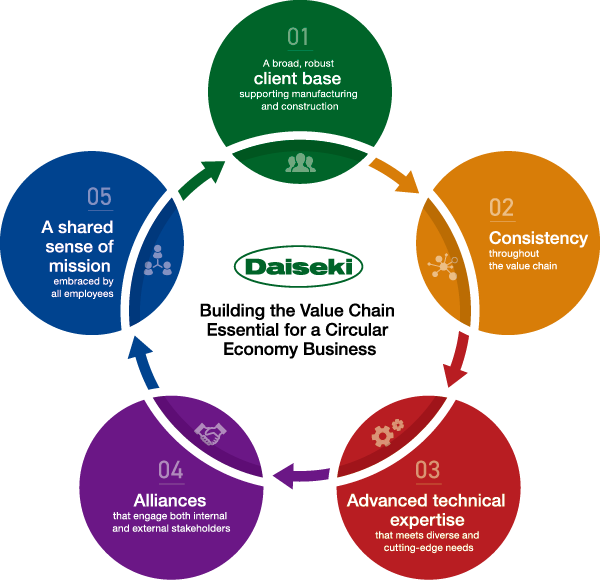
- 01
- A broad, robust client base supporting manufacturing and construction

Building strong relationships with a diverse range of clients not only facilitates sales growth and risk resilience but also expands opportunities for resource reuse. This foundation is a crucial strength that serves as a source of added value through environmental value creation.
- 02
- Consistency throughout the value chain
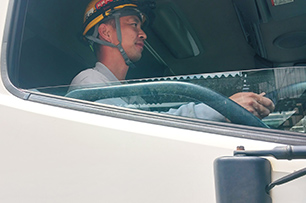
To optimally address the diverse needs of our clients, we ensure we have the necessary functions and capabilities in place. In particular, our ability to manage the entire process from receiving orders nationwide, collecting and transporting waste, performing recycling treatment, to selling recycled products plays a key role in our ongoing growth as an environmental value-creation company.
- 03
- Advanced technical expertise that meets diverse and cutting-edge needs
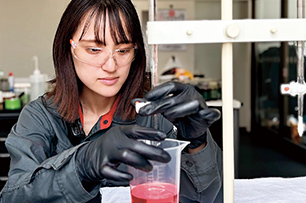
To equip ourselves with the technical capabilities to meet our clients’ most advanced needs, we pursue research and development not only in traditional technologies but also in acquiring new technologies. Additionally, our employees proactively embody “wisdom, ingenuity, and action” by proposing and implementing cost-reduction improvements.
- 04
- Alliances that engage both internal and external stakeholders
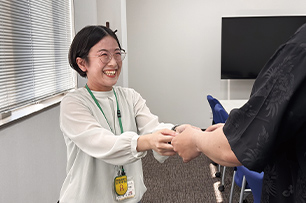
To fulfill the needs of our clients and society under the “One Daiseki” approach, we actively collaborate with a wide range of stakeholders, including partner companies, corporations, universities, and experts who possess technical skills and know-how. We prioritize building cooperative and trust-based relationships with external partners from a long-term perspective, rather than focusing solely on short-term profits within our own company.
- 05
- A shared sense of mission embraced by all employees
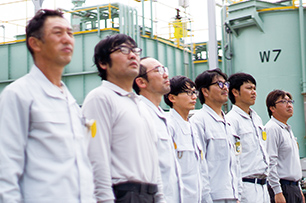
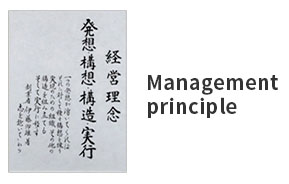
We uphold the Management Principles of “Ideas, Plans, Structures, Actions” and inherit the values of “wisdom, ingenuity, and action.” Regardless of role or position, all employees share a sense of mission to resolve social challenges while ensuring economic efficiency. Many employees driven by this mission actively engage in new business development.